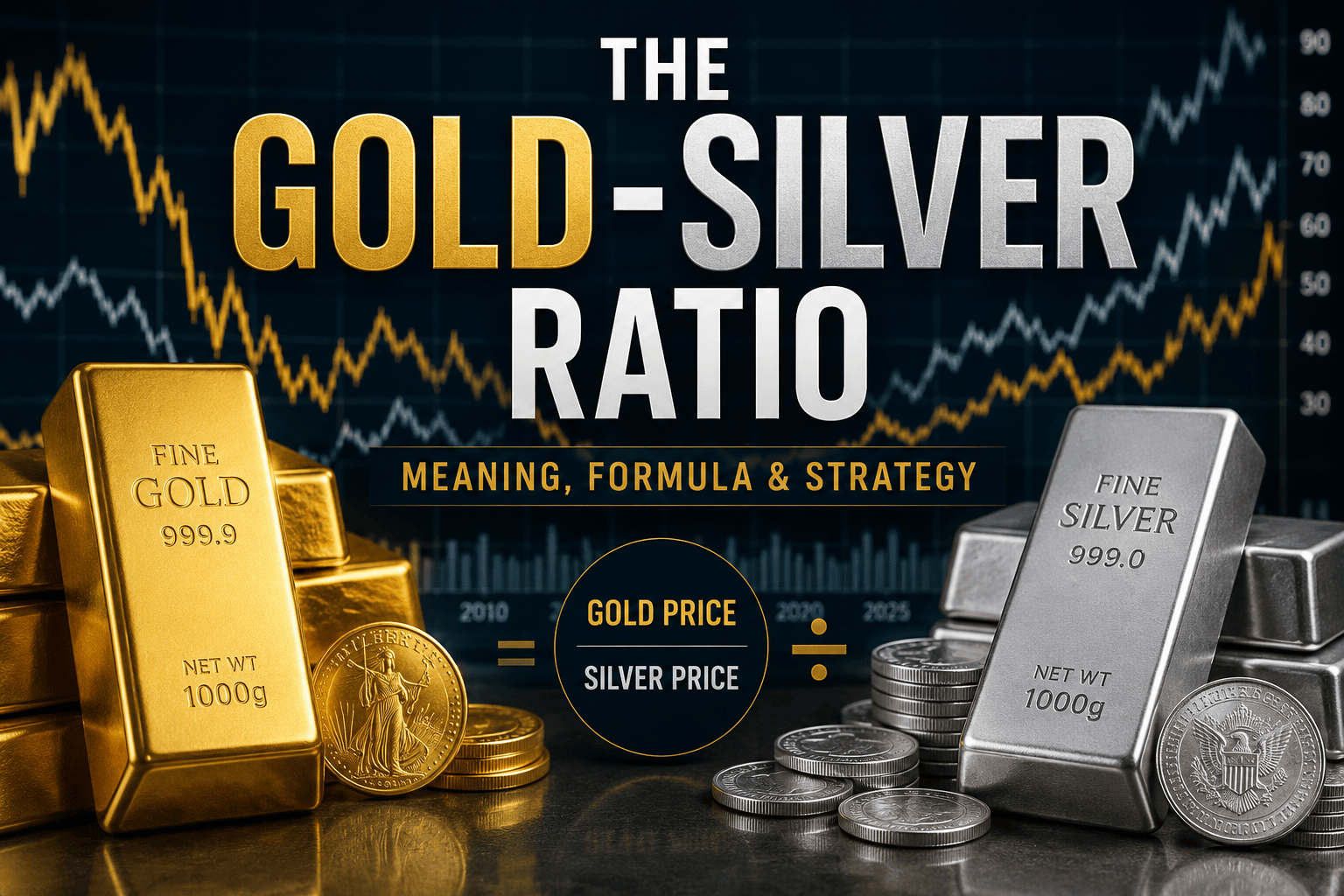

The Gold-Silver Ratio is one of the most important indicators used by investors and commodity traders to compare the relative value of gold and silver. Whether you’re investing in precious metals for wealth preservation or looking for trading opportunities, understanding the Gold-Silver Ratio can help you make better decisions.
In this guide, you’ll learn what the Gold-Silver Ratio is, how it is calculated, why it matters, and how to use it in your investment strategy.
Table of Contents
What is the Gold-Silver Ratio?
The Gold-Silver Ratio measures how many ounces of silver are required to buy one ounce of gold.
In simple words, it compares the prices of gold and silver to determine which metal appears relatively cheaper or more expensive.
For example:
- Gold Price = $3,000 per ounce
- Silver Price = $30 per ounce
Gold-Silver Ratio = 3000 ÷ 30 = 100
This means 100 ounces of silver are equal in value to one ounce of gold.
Gold-Silver Ratio Formula
The formula is straightforward:
Gold-Silver Ratio = Gold Price ÷ Silver Price
Example:
| Gold Price | Silver Price | Ratio |
|---|---|---|
| $2,500 | $25 | 100 |
| $2,800 | $35 | 80 |
| $3,000 | $40 | 75 |
A lower ratio indicates silver is becoming stronger relative to gold, while a higher ratio suggests silver is relatively undervalued.
Why is the Gold-Silver Ratio Important?
The Gold-Silver Ratio helps investors identify relative value between gold and silver.
It is useful for:
- Comparing gold and silver prices
- Finding investment opportunities
- Timing precious metal purchases
- Diversifying investment portfolios
- Understanding market sentiment
Many long-term investors monitor this ratio before buying either gold or silver.
What Does a High Gold-Silver Ratio Mean?
When the ratio is very high (for example, above 90):
- Gold is expensive compared to silver.
- Silver may be undervalued.
- Some investors consider buying silver instead of gold.
However, a high ratio does not guarantee that silver prices will immediately rise.
What Does a Low Gold-Silver Ratio Mean?
A low ratio (for example, below 50) usually indicates:
- Silver has outperformed gold.
- Gold may appear relatively cheaper.
- Investors may consider increasing gold holdings.
Historical Gold-Silver Ratio
Historically, the Gold-Silver Ratio has fluctuated significantly.
Approximate ranges:
- 30–40: Silver relatively expensive
- 50–70: Historical average range
- 80–100+: Silver relatively cheap
Extreme readings often attract the attention of long-term investors.
Gold-Silver Ratio Trading Strategy
Many traders use the Gold-Silver Ratio Trading Strategy instead of predicting individual metal prices.
Strategy 1: High Ratio
If the ratio rises significantly:
- Buy Silver
- Hold or reduce Gold exposure
Strategy 2: Low Ratio
If the ratio falls sharply:
- Buy Gold
- Reduce Silver exposure
This approach focuses on the relative performance of the two metals rather than their absolute prices.
Gold vs Silver: Which is Better?
| Gold | Silver |
|---|---|
| Lower volatility | Higher volatility |
| Better wealth preservation | Higher growth potential |
| Central bank demand | Strong industrial demand |
| More stable | More price fluctuations |
Gold is generally preferred for stability, while silver offers greater upside potential during strong commodity cycles.
Advantages of Using the Gold-Silver Ratio
- Easy to calculate
- Helps compare relative value
- Useful for long-term investors
- Assists in portfolio allocation
- Identifies potential buying opportunities
Limitations of the Gold-Silver Ratio
Although useful, the ratio has limitations.
- It does not predict exact price movements.
- Economic conditions can change quickly.
- Industrial demand strongly affects silver prices.
- Interest rates and inflation influence both metals differently.
Therefore, investors should combine the ratio with fundamental and technical analysis.
Who Should Use the Gold-Silver Ratio?
The Gold-Silver Ratio is useful for:
- Long-term investors
- Commodity traders
- Gold ETF investors
- Silver ETF investors
- Wealth preservation investors
- Portfolio managers
Frequently Asked Questions (FAQs)
What is a good Gold-Silver Ratio?
There is no fixed “good” ratio. Many investors watch for extreme highs or lows to identify potential opportunities.
Is a higher Gold-Silver Ratio better?
A higher ratio generally indicates silver is cheaper relative to gold, but it does not guarantee future performance.
Can the Gold-Silver Ratio predict market trends?
Not directly. It is a relative valuation tool and should be used alongside other market indicators.
Should beginners use the Gold-Silver Ratio?
Yes. It is a simple and effective way to understand the relationship between gold and silver prices.
Conclusion
The Gold-Silver Ratio is a valuable indicator for anyone interested in precious metals investing. By comparing the prices of gold and silver, investors can identify potential opportunities and make more informed decisions.
While the ratio should not be used as the only investment tool, combining it with market analysis, economic trends, and risk management can improve your overall investment strategy.
Whether you prefer gold, silver, ETFs, or commodity trading, understanding the Gold-Silver Ratio can help you build a smarter investment portfolio.
Key Takeaways
- The gold-silver ratio indicates the number of ounces of silver needed to buy one ounce of gold.
- Historically, the ratio was set by governments for monetary stability but now fluctuates with the market.
- The gold-silver ratio reached its highest level in April 2020, exceeding 125:1.
- Investors can trade the gold-silver ratio by hedging one metal against the other for potential profit.